Thursday, March 10, 2011

How To Purchase Quo Brushes

The blind and the China Tibet

Tibet closed to foreigners. A dall'anniversario two days of the revolt of March 10, 1959 - three years ago coincided with a new "Insurgency" that killed at least 19 people to Beijing, 400 for the Tibetan government in exile - the Chinese regime is not better than casting doubt on the reception capacity of the autonomous region . The local party chief Zhang Qingli talked about "a lack of beds." "The Tibet - reads the China Daily - has just over a thousand hotels with 80 thousand beds, so it is not possible to allow to visit during peak periods," he said. In fact, the Dragon does not want anything that could upset the "fundamental principle" that Tibet "is an inalienable part of China," how to read the White Paper on Tibet in 1992 . It is the principle " sovereignty and territorial integrity," one of the "dogmas" ("core Interests") which is built around the Chinese policy. to attack - the second rhetoric Beijing - is the "clique" of the Dalai Lama, who carefully 'national unity'.

accusation, repeated like a mantra, and returned even yesterday to resonate in the words of Qiangba Puncog, head of the Standing Committee of the People of the Tibetan Autonomous Region. "The death of the Dalai Lama not upset the political stability of the region" because we are facing "a religious leader and not political," to "a wolf dressed as Monaco." Beijing plans are continuing. President Hu Jintao has assured that "meticulous efforts" will be dedicated "to the program of reform, development and stability" in Tibet. Programs that will translate into new infrastructure to make the region more accessible. Transport Minister, Li Shengling said that " by 2015 most of the villages of Tibet will be accessible via the expressways' . In addition, new rail links to reduce journey times between Tibet and Xinjiang. Over the next five years will build a new railway between Golmud in Qinghai Province and Korla, Xinjiang. Golmud is the main town on the Qinghai line connecting the Tibetan capital, Lhasa with Qinghai. Estimated cost: 310 billion yuan (47.6 billion U.S. dollars). Including the construction of six airports.

is just the latest piece of a long-term strategy. A commitment necessary for development, according to Beijing. A "cultural genocide" taking the Dalai Lama . Opened in 2006, is Qinghai-Tibet Railway (cost $ 4.3 billion) has transported 18 million passengers and 90 million tonnes of cargo. According to official statistics, in 2009, Tibet received 5.56 million tourists. Including Chinese. ; ;

Tuesday, March 8, 2011

Masterbate With Lube And Ham

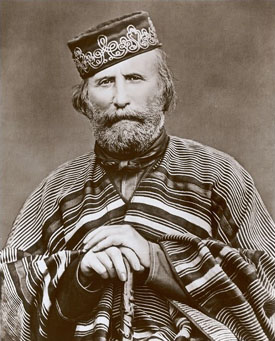
150 years: what are we celebrating?

of Luca Torre

What Italians celebrate the upcoming March 17 ? seems that this anniversary is an opportunity to rethink, or even the justification of national unification beyond the rhetoric of each matrix, but is really an opportunity to amplify these rhetorical stress and the lack of a shared national history. It 'obvious that Italians do not identify with a common history. Perhaps because they are too full of history, too clever by a knowledge mediated by in-depth historical and political reflection of Guicciardini, Machiavelli, until Botero, Mosca and Pareto, or simply a kind of "anthropological data now" love to divide as in the times of the medieval communes. So March 17 is an opportunity for them to pick out old and new flags of every color and type and stage shows such as and just the "style curved-south (or north), from complete fans, shouting slogans as if they were, their own truths (or vice versa, shouting their slogans as solemn truth.)


I've seen people defend the temporal power of popes, Pius IX and the Syllabus, and reject religious pluralism and the liberal state in the middle of 2011 and, with the same security, proposing to demolish the statues of Garibaldi and "revise" the history of the Risorgimento . I saw people of a certain political party (but immediately disclaimed) burning in effigy of the hero Garibaldi called foul because, after long and extensive studies, it was discovered that the unification would not have been a good deal for the North of Italy and - one might add, because now is a conditioned reflex - the small and medium-sized enterprises which make up the backbone of the Italian economy. Mirror image: I saw other people in the name of historical truth, proposing the thesis that, in essence, the Bourbon Kingdom was neither outstanding nor poor and that the problems of the South started with its unification. And in a demonstration organized by a local chapter of the Society of National History in Italy for the 150th anniversary of the unitary state, one of the speakers argued that: a) Naples - the capital of the Bourbon kingdom, not the entire kingdom - ; had six million inhabitants and was one of the largest cities and important in Europe (the latter made true, but definitely the first fake), b) that the South "was better economically under the Bourbons" (imagine that the speaker was unaware of the investigation Franchetti on the conditions of the Neapolitan Province, Abruzzo, Molise, Basilicata and Calabria again in 1873 / 74). One could continue the list with a number of facts, sometimes widely known by historians, taken out of context and passed off as truth that even unheard of Fortunato and Gramsci had the courage to write and distribute, as he said in an interview with public issued at the withdrawal of a literary prize in the city of Bari, the author of best-selling book on the topic of the moment.

What then Italians will celebrate the 17th March? Should we worry about the lack of a shared national history? Perhaps there is no need to worry because the divisions of the Italians are the only indicator of their scrupulous. Then there are more immediate things to think about, like the economic crisis and the reform of justice. Finally, politics will intervene again to solve any problem and dispute, interpreting the best the sense of cultural diversity through the establishment of a Bourbon day of remembrance and celebration of the Battle of Legnano . Who knows.


Head Fire Racquetball

China, war on poverty

An editorial in the China Daily celebrates the end of "obsession" of China : one for the GDP and growth at all costs. A new leitmotiv seems to have replaced the 'welfare of the people, "a more equitable distribution of wealth, a way for the talking heads in Beijing to defuse a time bomb: the growing social unrest for inequalities that cut Chinese society. The Dragon has thus decided to declare war on poverty, said he was ready to promote "education, health, social security and the creation of new jobs" and, in the words of the Minister of Finance Xie Xuren, to spend two thirds of the central state budget to achieve the objective. Premier Wen Jiabao has also shown the maturity that the procedure is given: ten years. "We will intensify our efforts against poverty through aid and development projects," he assured Wen.
The State Council, announced the then prime minister, is preparing draft a new plan for the period 2011-2020 in which the poverty of China will be "significantly increased" over the current year, 1196 yuan (about 130 euro, or approximately 50 cents according to international standards of evaluation ). How do you remember "AgiChina 24", according to United Nations standards, which set the poverty line to below a dollar per head per day, in China there are still 150 million poor people. The ads,
facts yesterday, across the board: Beijing plans to allocate two-thirds of the budget (5.436 trillion yuan, 827.6 billion U.S. dollars, an increase of 12.5 percent compared to that of 'last year) to hospitals, schools, jobs. The government will give "high priority to improving the lives of people in five years to 2015." Poverty - despite the tumultuous economic growth that China has experienced in recent years - is an ancient evil that has long plagued the country. A recent World Bank report captures the titanic effort made to resize: between 1981 and 2004 the proportion of the population living below the poverty line fell from 65% to 10%, and the absolute number of poor dropped from 652 to 135 million , down more than half a billion people.

Monday, March 7, 2011

How Do You Delete Nasza Klasa

Dragon

As befits the Dragon, is something enormous. The Communist Party models the new "face" of China, what will come out the twelfth five year plan 2011-2015. And it does using all the ingredients of social engineering in Chinese sauce. The dogmas of "harmonious society" and "inclusive growth" is not enough. The rhetoric National has a new formula. The party wants to spread hours "Xingfu", happiness and prosperity. In fact, the "new" China seems to play defense. The targets set by the party - enucleated yesterday a speech two hours long by Premier Wen Jiabao with which you are open the work of the National People's Congress (NPC) - reveal worries that snake beneath the skin of the Asian giant. A given for all: social unrest in 2005 were 87 thousand, then the regime decided to obscure this type of statistic.

China wants stability and is willing to applying the brakes to economic growth . Wants to correct social imbalances , from the unequal distribution of wealth. He wants to mend the damage done to the environment from a tumultuous growth. fears like never before, the "feet" of inflation because it knows that the race prices could fuel new tensions and threatening. "Recently prices went up very quickly and have reinforced expectations of further inflation ', was the alarm raised by Wen. The Chinese premier unveiled Number is 8% growth rate the "ideal" for 2011, the 7.5% for subsequent years. He then promised an effort to contain inflation by 4% per year (in January was 4.9%), announcing measures to encourage domestic consumption. "Expanding domestic demand is a long-term strategic goal and a crucial milestone the economic development of China," he said.

How wrote the newspaper in Hong Kong, South China Morning Post the Party is facing imbalances that could sink the rhetoric of 'Welfare of the people, "preached by its leaders. In 2008, the newspaper reported , "10% of the richest families in China earned 55 times more than the poorest 10%. Many working class families living in inadequate housing , have no health care or education. " Just take an escort to the objectives of the plan to seize the ambitions of the Dragon. Beijing aims "to create a pension system that covers rural population and 357 million citizens." Announced "plans to build or renovate 36 million apartments for low-income families." Would 'increase of 13 percent per year on minimum wage' and 'one year every 12 months life expectancy of the population. " C 'is also the environment chapter. The plan sets out a series of goals to defend him: cut consumption of energy by 16%, reduce carbon dioxide emissions by 17%,
increase of 11.4% share of energy consumption by fuel non-fossil. And in terms of agriculture - other area "hot" for the future of the country - is set a target ambitious: "to produce not less than 540 million tonnes of wheat a year." Finally, the chapter technological innovation. The research spending will be 2.2% of GDP. It is the land on which Beijing is defying the world. spending on research and development China grows 25% a year, the U.S. has declined by 4%. in 2009, China has invested in 89 billion dollars. In 2006 the money spent was 34 billion: the figure is almost doubled. In 2010, the Dragon launched the world's fastest train. He has carried out 15 missions space, all successful. By 2020, will have its first space station. The Dragon has won the first (displacing Germany) export of electronic products and machinery, namely high-tech sectors.